Corporate training has become an essential part of modern business growth and employee development. Companies across industries are continuously investing in workforce learning to improve productivity, leadership, communication, customer service, and overall workplace performance.
As organisations expand their employee development strategies, one common question arises: should businesses choose online corporate training or onsite corporate training? Both learning methods offer unique advantages and challenges. The right choice depends on several factors including company goals, employee preferences, industry requirements, budget, and workplace structure.
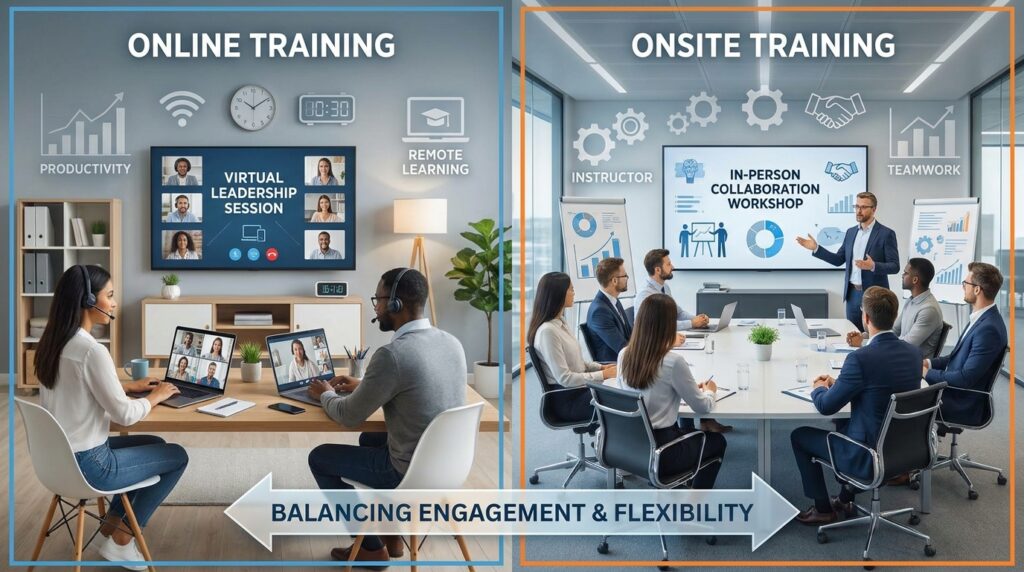
With the growth of remote work, digital transformation, and hybrid workplaces, online training has become increasingly popular. At the same time, onsite corporate training continues to provide strong value through face-to-face interaction, practical workshops, and team collaboration.
In this article, we compare online vs onsite corporate training, explore their benefits and limitations, and help businesses determine which option is best for their workforce development goals.
What Is Online Corporate Training?
Online Learning refers to employee training programs delivered through digital platforms and virtual learning environments.
Online training can include:
- Live virtual workshops
- Video conferencing sessions
- Self-paced e-learning courses
- Interactive webinars
- Learning management systems (LMS)
- Digital assessments
- Virtual coaching sessions
Employees can access online training from:
- Offices
- Homes
- Remote locations
- Mobile devices
Online learning has become increasingly popular because of its flexibility, scalability, and convenience.
What Is Onsite Corporate Training?
Corporate Training refers to in-person employee learning programs conducted at the company’s office, training center, or event venue.
Onsite training often includes:
- Face-to-face workshops
- Team-building activities
- Group discussions
- Role-playing exercises
- Practical demonstrations
- Leadership seminars
- Interactive collaboration sessions
This training format allows employees and trainers to interact directly in a physical environment. Many organisations still prefer onsite learning for hands-on skills development and workplace collaboration.
Why Corporate Training Is Important
Before comparing both methods, it is important to understand why corporate training matters for businesses.
Employee training helps organisations:
- Improve workplace productivity
- Build leadership skills
- Enhance communication
- Increase employee engagement
- Strengthen teamwork
- Improve customer service
- Support digital transformation
- Reduce employee turnover
Businesses that invest in employee development are often more competitive, innovative, and productive.
The real question is not whether companies should provide training — it is which training method delivers the best results.
Benefits Of Online Corporate Training
Online learning has transformed workplace education over the past few years. Businesses increasingly choose online training because of its flexibility and accessibility.
Selecting the right training format becomes easier when businesses understand the broader impact of employee development and provider selection. Learn why workforce learning matters in Why Corporate Training Is Important for Business Growth and discover practical selection criteria in How to Choose the Best Corporate Training Company in Dubai. Find more expert guidance at Corporate Training Companies in Dubai.
1. Flexibility & Convenience
One of the biggest advantages of online corporate training is flexibility.
Employees can learn:
- From any location
- At flexible times
- Without travelling
- Using laptops or mobile devices
This is especially valuable for:
- Remote teams
- International businesses
- Hybrid workplaces
- Employees with busy schedules
Online learning allows organisations to train employees without significantly disrupting daily operations.
2. Cost-Effective Learning
Online training is often more affordable than onsite workshops.
Businesses can reduce costs related to:
- Venue bookings
- Travel expenses
- Accommodation
- Printed materials
- Event logistics
Virtual learning platforms allow companies to train larger groups without increasing operational costs significantly.
This makes online learning attractive for:
- Small businesses
- Startups
- Large distributed organisations
3. Scalable Training Solutions
Online learning platforms make it easy to train employees across multiple locations simultaneously.
Businesses can:
- Deliver standardised training globally
- Provide consistent learning experiences
- Train large teams efficiently
This scalability is particularly useful for multinational organisations and rapidly growing businesses.
4. Self-Paced Learning Opportunities
Many online training programs allow employees to learn at their own pace.
Employees can:
- Rewatch sessions
- Pause lessons
- Complete modules gradually
- Learn according to their schedules
Self-paced learning improves flexibility and helps employees absorb information more comfortably.
5. Easy Access To Digital Resources
Online training platforms often provide:
- Recorded sessions
- Digital documents
- Interactive quizzes
- Assessments
- Progress tracking
Employees can revisit training materials whenever needed, improving long-term knowledge retention.
Challenges Of Online Corporate Training
While online learning offers many benefits, it also comes with limitations.
1. Reduced Face-To-Face Interaction
Virtual learning may reduce:
- Personal engagement
- Team interaction
- Real-time collaboration
- Relationship building
Employees may feel less connected compared to physical classroom environments.
2. Lower Engagement Levels
Some employees struggle to stay focused during long online sessions.
Distractions at home or multitasking may reduce learning effectiveness.
Virtual fatigue has become a common challenge in remote learning environments.
3. Limited Hands-On Learning
Certain skills require physical demonstrations and practical exercises that are difficult to replicate online.
Industries such as:
- Healthcare
- Hospitality
- Manufacturing
- Technical operations
often benefit more from onsite training.
4. Technology Challenges
Online learning depends heavily on:
- Stable internet connections
- Digital devices
- Technical platforms
Technical issues may interrupt learning experiences and reduce engagement.
Benefits Of Onsite Corporate Training
Onsite training remains one of the most effective learning methods for many organisations.
Face-to-face interaction creates highly engaging and collaborative learning environments.
1. Better Employee Engagement
In-person training often creates stronger engagement because employees can interact directly with trainers and colleagues.
Onsite workshops encourage:
- Active participation
- Group discussions
- Real-time feedback
- Collaborative learning
Employees are often more focused in physical learning environments.
2. Stronger Team Collaboration
Onsite training improves teamwork through:
- Group activities
- Team-building exercises
- Role-playing sessions
- Collaborative discussions
Face-to-face interaction helps employees build stronger workplace relationships.
This is especially valuable for:
- Leadership development
- Communication training
- Team-building workshops
3. Practical Hands-On Learning
Certain training programs require physical interaction and real-world practice.
Onsite training is ideal for:
- Technical skills development
- Equipment demonstrations
- Customer service simulations
- Healthcare training
- Safety workshops
Hands-on learning improves practical understanding and skill application.
4. Immediate Trainer Support
Employees can ask questions and receive immediate guidance during onsite workshops.
Trainers can:
- Observe employee behaviour
- Provide direct feedback
- Adjust learning methods
- Improve participation
This creates more personalised learning experiences.
5. Improved Workplace Culture
Onsite learning events help strengthen company culture and employee engagement.
Employees often feel:
- More connected
- More motivated
- More engaged with colleagues
Training sessions also encourage networking and relationship-building across departments.
Challenges Of Onsite Corporate Training
Although onsite training offers strong engagement, it also has limitations.
1. Higher Costs
Onsite training often involves:
- Venue expenses
- Travel costs
- Catering
- Accommodation
- Printed materials
These costs can become significant for large organisations.
2. Scheduling Difficulties
Coordinating employee schedules for in-person workshops can be challenging.
Businesses may struggle to:
- Pause operations
- Arrange group sessions
- Manage attendance
This is especially difficult for companies with shift-based or remote teams.
3. Limited Scalability
Training large groups across multiple locations may require:
- Multiple sessions
- Additional trainers
- Increased logistical planning
Onsite learning is generally less scalable than online training.
Online vs Onsite Corporate Training Comparison
| Feature | Online Training | Onsite Training |
|---|---|---|
| Flexibility | High | Moderate |
| Employee Engagement | Moderate | High |
| Cost Efficiency | High | Moderate |
| Hands-On Learning | Limited | Excellent |
| Team Collaboration | Moderate | Strong |
| Scalability | Excellent | Limited |
| Personal Interaction | Lower | Higher |
| Convenience | Excellent | Moderate |
| Customisation | High | High |
| Knowledge Retention | Moderate | Strong |
Which Training Method Is Better?
There is no single answer because the best option depends on organisational needs and learning objectives.
Online Training Is Better For:
- Remote teams
- Global organisations
- Flexible learning schedules
- Large-scale employee training
- Cost-effective workforce learning
- Digital skills development
- Compliance training
Onsite Training Is Better For:
- Leadership workshops
- Team-building activities
- Communication training
- Hands-on technical learning
- Customer service simulations
- Employee engagement events
- Collaborative learning experiences
The Rise Of Hybrid Corporate Training
Many businesses now combine both methods through hybrid learning models.
Hybrid training combines:
- Online learning flexibility
- Onsite interaction and collaboration
For example:
- Employees may complete online modules first
- Then attend onsite workshops for practical application
Hybrid learning offers:
- Greater flexibility
- Better engagement
- Improved scalability
- Enhanced learning outcomes
This approach is becoming increasingly popular among UAE businesses and multinational organisations.
Corporate Training Trends In 2026
Modern corporate learning continues to evolve rapidly.
Current trends include:
- AI-powered learning systems
- Microlearning modules
- Virtual reality training
- Hybrid learning programs
- Employee wellness workshops
- Gamified learning experiences
- Data-driven learning analytics
Businesses increasingly prioritise flexible and employee-centered learning strategies.
How To Choose The Right Training Method
Businesses should evaluate:
- Training goals
- Workforce size
- Budget
- Industry requirements
- Employee preferences
- Technical capabilities
The best learning strategy often combines both digital and in-person experiences depending on the company’s needs.
Final Thoughts
Both online and onsite corporate training offer valuable benefits for businesses and employees.
Online learning provides:
- Flexibility
- Scalability
- Cost efficiency
- Accessibility
Onsite training offers:
- Stronger engagement
- Better collaboration
- Hands-on learning
- Improved workplace interaction
The best choice depends on organisational objectives, workforce structure, and training goals.
As modern workplaces continue evolving, many companies are moving toward hybrid learning models that combine the strengths of both approaches.
Businesses that invest in effective employee training — whether online, onsite, or hybrid — are more likely to improve productivity, develop future leaders, strengthen workplace culture, and achieve long-term business growth.
