As workplaces continue to evolve through digital transformation, artificial intelligence, remote collaboration, and changing customer expectations, soft skills have become more important than ever. While technical knowledge and industry expertise remain valuable, businesses are increasingly prioritising employees who possess strong communication, leadership, emotional intelligence, and problem-solving abilities.
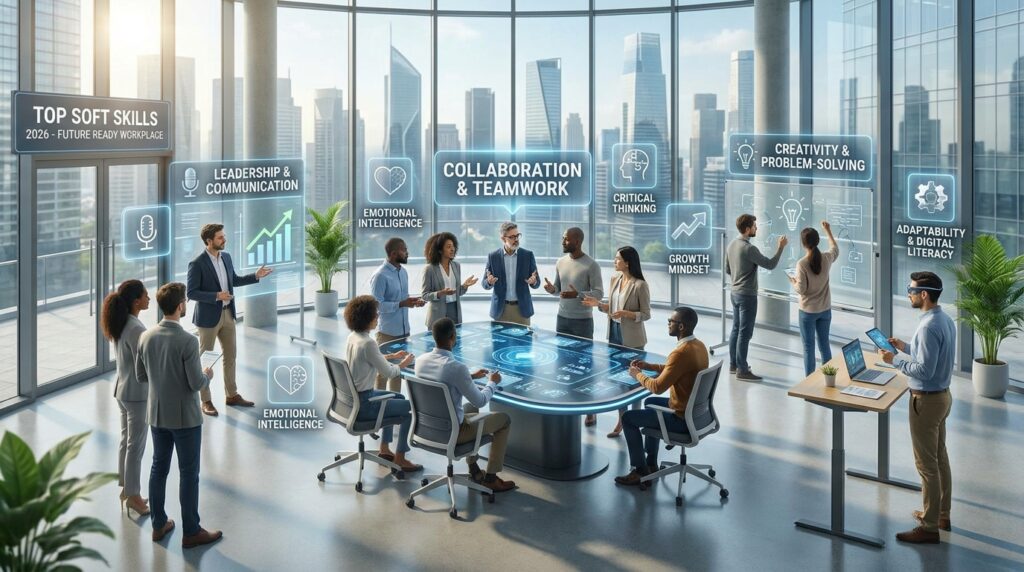
In 2026, employers are no longer looking only for employees who can perform technical tasks. They also want professionals who can collaborate effectively, adapt to change, think critically, and communicate professionally in fast-paced work environments.
Soft skills play a major role in:
- Employee productivity
- Workplace communication
- Leadership development
- Team collaboration
- Customer satisfaction
- Career growth
- Organisational success
Companies across industries are investing heavily in soft skills training because these abilities directly impact workplace performance and business growth.
In this article, we explore the top soft skills every employee should learn in 2026 and why they are essential for modern workplace success.
What Are Soft Skills?
Soft Skills are personal, interpersonal, and communication abilities that influence how employees interact, collaborate, and perform in professional environments.
Unlike technical or hard skills, soft skills are more focused on:
- Behaviour
- Communication
- Emotional intelligence
- Leadership
- Teamwork
- Problem-solving
Soft skills help employees work effectively with colleagues, customers, managers, and teams.
Examples include:
- Communication
- Time management
- Leadership
- Adaptability
- Team collaboration
- Emotional intelligence
- Critical thinking
In today’s workplace, soft skills are often considered equally important as technical expertise.
Why Soft Skills Matter In 2026
The modern workplace is changing rapidly due to:
- Artificial intelligence
- Automation
- Hybrid work environments
- Global collaboration
- Customer-centric business models
As routine tasks become increasingly automated, human-centered skills are becoming more valuable.
Soft skills help employees:
- Adapt to workplace changes
- Communicate effectively
- Build strong professional relationships
- Solve problems creatively
- Lead teams successfully
Businesses with employees who possess strong soft skills often experience:
- Better teamwork
- Higher productivity
- Improved customer satisfaction
- Stronger workplace culture
- Increased innovation
Soft skills are now essential for both individual career growth and organisational success. Strong soft skills play a major role in creating engaged teams and long-term business success. Companies seeking stronger workplace culture should review Best Employee Engagement Strategies For Modern Businesses and understand the wider impact discussed in Why Corporate Training Is Important for Business Growth. Visit Corporate Training Companies in Dubai for more industry resources.
1. Communication Skills
Communication remains one of the most important workplace skills in 2026.
Employees must communicate effectively through:
- Meetings
- Emails
- Presentations
- Virtual collaboration tools
- Customer interactions
Strong communication skills help employees:
- Share ideas clearly
- Avoid misunderstandings
- Improve teamwork
- Build professional relationships
- Deliver better customer service
Communication skills include:
- Verbal communication
- Written communication
- Active listening
- Presentation abilities
- Professional email writing
Employees with excellent communication skills are often more productive and effective in collaborative work environments.
2. Emotional Intelligence
Emotional Intelligence has become one of the most valuable workplace skills.
Emotional intelligence refers to the ability to:
- Understand emotions
- Manage reactions
- Show empathy
- Handle workplace stress
- Build positive relationships
Employees with high emotional intelligence can:
- Resolve conflicts effectively
- Communicate professionally
- Work well under pressure
- Collaborate with diverse teams
For leaders and managers, emotional intelligence is essential for motivating employees and creating healthy workplace cultures.
As businesses focus more on employee wellbeing and collaboration, emotional intelligence will continue to grow in importance.
3. Adaptability & Flexibility
The workplace is evolving faster than ever due to technology and market changes.
Employees must now adapt to:
- New technologies
- AI-driven systems
- Remote work environments
- Changing business strategies
- New customer expectations
Adaptability helps employees:
- Learn quickly
- Handle change confidently
- Remain productive during transitions
- Solve new challenges effectively
Flexible employees are highly valuable because they can work efficiently in dynamic and unpredictable environments.
Businesses increasingly prefer employees who can adjust quickly to change and continue performing effectively.
4. Critical Thinking & Problem-Solving
Problem-solving is one of the most important professional skills for modern workplaces.
Employees are expected to:
- Analyse situations
- Identify solutions
- Think strategically
- Make informed decisions
Critical thinking helps employees:
- Evaluate information logically
- Avoid poor decisions
- Improve efficiency
- Solve workplace challenges creatively
Strong problem-solving abilities are especially important in:
- Leadership roles
- Project management
- Customer service
- Technology industries
- Business operations
Employers highly value professionals who can identify problems and develop practical solutions independently.
5. Teamwork & Collaboration
Modern workplaces rely heavily on teamwork and cross-functional collaboration.
Employees must work effectively with:
- Different departments
- Remote teams
- International colleagues
- Clients and stakeholders
Team collaboration skills include:
- Respectful communication
- Active participation
- Conflict resolution
- Cooperation
- Shared problem-solving
Strong teamwork improves:
- Workplace productivity
- Project success
- Employee morale
- Innovation
- Organisational performance
Businesses with collaborative workplace cultures often achieve better long-term results.
6. Time Management
Time management is essential for maintaining productivity in fast-paced workplaces.
Employees who manage time effectively can:
- Meet deadlines
- Prioritise tasks
- Reduce stress
- Improve efficiency
- Increase productivity
Poor time management often leads to:
- Missed deadlines
- Reduced performance
- Workplace stress
- Lower efficiency
Time management skills are particularly important in:
- Remote work environments
- Project-based roles
- Leadership positions
- Customer service industries
Modern employees must balance multiple tasks while maintaining high performance standards.
7. Leadership Skills
Leadership is no longer important only for managers and executives.
Businesses now value employees who can:
- Take initiative
- Guide teams
- Solve problems
- Support colleagues
- Contribute ideas
Leadership skills include:
- Decision-making
- Accountability
- Communication
- Motivation
- Strategic thinking
Employees with leadership potential are often better prepared for career advancement and management opportunities.
Leadership development is becoming a major focus for businesses investing in workforce growth.
8. Creativity & Innovation
Innovation is one of the main drivers of business growth in 2026.
Creative employees help organisations:
- Develop new ideas
- Improve processes
- Solve problems differently
- Create better customer experiences
Creativity is especially important in:
- Marketing
- Technology
- Product development
- Design industries
- Business strategy
Employers increasingly value professionals who can think creatively and contribute innovative solutions.
Businesses that encourage innovation often remain more competitive in changing markets.
9. Conflict Resolution
Workplace conflicts are common in collaborative environments.
Employees with conflict resolution skills can:
- Handle disagreements professionally
- Maintain workplace relationships
- Reduce tension
- Improve teamwork
Conflict resolution requires:
- Emotional intelligence
- Communication skills
- Patience
- Problem-solving abilities
Healthy conflict management contributes to positive workplace culture and stronger employee relationships.
10. Digital Communication Skills
As remote and hybrid work models continue to grow, digital communication skills are becoming essential.
Employees must effectively use:
- Video conferencing tools
- Project management software
- Collaboration platforms
- Professional messaging systems
Digital communication requires:
- Professional online behaviour
- Clear virtual communication
- Technical confidence
- Collaboration abilities
Strong digital communication improves remote teamwork and organisational efficiency.
Soft Skills Training In Modern Businesses
Many organisations are now investing heavily in soft skills development programs.
Corporate training companies provide workshops focused on:
- Communication skills
- Emotional intelligence
- Leadership development
- Team collaboration
- Workplace professionalism
- Customer interaction
Soft skills training helps businesses:
- Improve employee engagement
- Build stronger teams
- Increase productivity
- Enhance customer satisfaction
- Create better workplace cultures
Professional development programs are becoming essential for workforce growth and employee success.
Soft Skills Trends In 2026
Several soft skills trends are shaping modern workplaces.
AI-Human Collaboration
Employees must learn how to work alongside AI systems while maintaining human-centered skills.
Hybrid Communication
Remote and hybrid work environments require stronger virtual communication abilities.
Employee Wellbeing Focus
Emotional intelligence and empathy are becoming increasingly important for leadership and teamwork.
Continuous Learning
Employees must continuously develop both technical and interpersonal skills.
Diversity & Inclusion
Modern workplaces require better cultural awareness and inclusive communication skills.
How Employees Can Improve Soft Skills
Employees can improve soft skills through:
- Corporate training programs
- Online learning courses
- Workshops and seminars
- Coaching and mentoring
- Team-building activities
- Workplace practice
Continuous learning and self-awareness play a major role in soft skills development.
Employees who invest in improving interpersonal skills often experience better career growth opportunities.
Final Thoughts
Soft skills are becoming one of the most valuable assets in modern workplaces. As technology continues to transform industries, businesses increasingly need employees who can communicate effectively, adapt to change, collaborate with teams, and solve problems creatively.
The top soft skills every employee should learn in 2026 include:
- Communication
- Emotional intelligence
- Adaptability
- Critical thinking
- Team collaboration
- Leadership
- Time management
- Creativity
- Conflict resolution
- Digital communication
Employees who develop these abilities will remain highly valuable in evolving workplaces, while businesses that invest in soft skills training will build stronger teams, improve productivity, and achieve sustainable long-term growth.
